
Key points:
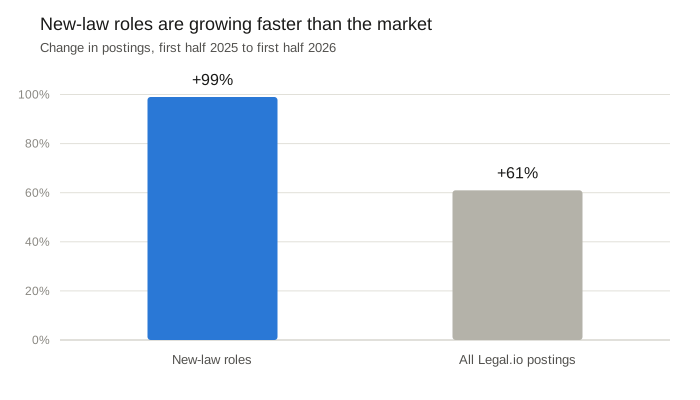
- Legal roles blending law with technology, product and process grew about 99% between the first halves of 2025 and 2026, well ahead of the roughly 61% rise in Legal.io's postings overall.
- The picture is a spectrum of maturity: legal operations is the established, broadly staffed base, while labels like legal engineer are smaller and still emerging.
- Even after the jump, the cluster is only about 2.4% of tracked postings - an expanding vocabulary, not a market-wide overhaul.
Job titles that blend legal expertise with technology, product and process are gaining ground faster than legal hiring overall. Postings in that cluster rose roughly 99% between the first halves of 2025 and 2026, according to a review of Legal.io's job-posting records - well ahead of the roughly 61% increase in the platform's total postings over the same window.
Why it matters: The gap, about 38 percentage points, is a cleaner signal than raw volume. It suggests the mix of legal work is tilting toward technology-and-process roles, not simply that more listings went up. But scale the claim carefully: even after outpacing the wider dataset, these roles account for only about 2.4% of tracked postings, up from roughly 2% a year earlier.
The big picture: The data does not show one new legal occupation arriving all at once. It shows a spectrum. Legal operations is a large, established category with a full career ladder; product-aligned legal work is a smaller but real presence; and the newest labels are still being coined and tested. Legal operations itself grew roughly in line with the overall market; the cluster outpaces the market only because the smaller, newer labels are rising much faster.

Legal operations anchors the mature end. It is by far the largest of the families and shows the broadest footprint, spanning specialist, analyst, manager, director and head-of-function titles - the kind of occupational infrastructure organized around communities like the Corporate Legal Operations Consortium. Notably, AI-tagged operations titles rose sharply year over year, an early vocabulary signal off a small base.
Legal engineer is the fastest-emerging label. It grew more than tenfold in the matched comparison, and about half of the postings carried senior or leadership language. The titles range from implementation, forward-deployed and product-specialist roles up to legal-engineering managers and heads of function - a sign that some employers are building a recognizable track, and that the work is about translating legal practice into deployable technology rather than pure software development.
Between the lines: The naming split follows where the employer sits. Technology providers advertise for legal engineers, implementation consultants and product specialists; law firms lean on practice innovation and knowledge-management language; professional-services firms such as EY use transformation. That makes any single-title count inherently incomplete - adjacent work enters the market under different professional dialects, and the labels signal overlap, not identical jobs.
The caveats matter for anyone citing the figures. The counts reflect posting records rather than confirmed unique vacancies or hires, and refreshed or location-specific listings can inflate them. The newer labels also rest on small posting volumes, so year-over-year percentages move sharply; the underlying database expanded after 2024, which is why the matched first-half comparison - not multi-year raw growth - is the reliable read.
The bottom line: The legal profession's job-title map is adding branches at different stages of maturity. Legal operations is established and broadly staffed; legal engineering is the sharpest new signal but still early and small. The vocabulary is broadening faster than the market as a whole - while remaining a modest share of legal hiring.