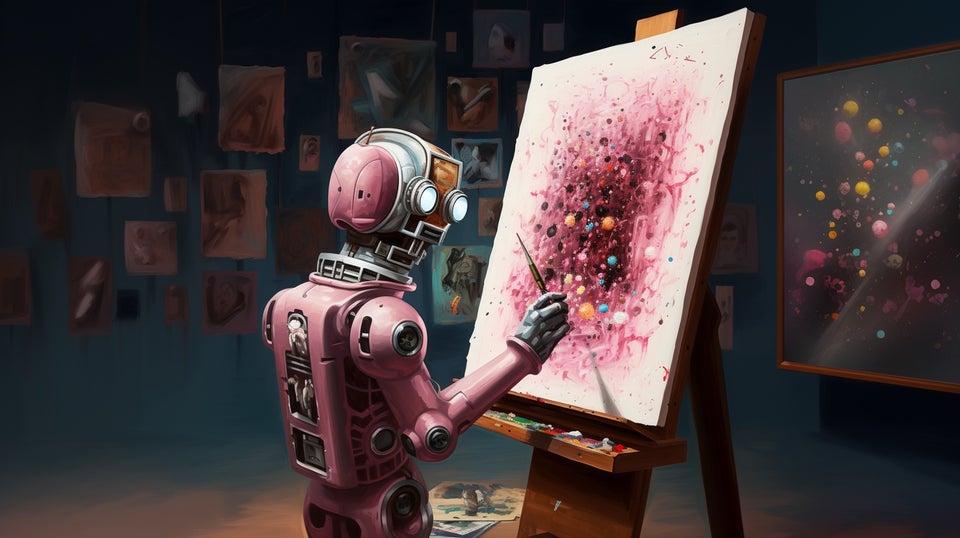
A U.S. court in Washington, D.C. has ruled that a work of art created by AI without any human input cannot be copyrighted under U.S. law.
This pivotal judgment came in response to computer scientist Stephen Thaler's attempt to secure copyright for a piece of art generated by his AI algorithm, the "Creativity Machine." Despite Thaler's multiple attempts to copyright the image as a "work-for-hire" with the Creativity Machine as the author and himself as the owner, the US Copyright Office consistently denied his requests.
Thaler, who also holds the position of president and CEO at Imagination Engines, had initiated a lawsuit against the office in June 2022 after his copyright application for the AI-created artwork "A Recent Entrance to Paradise" was declined. Judge Beryl A. Howell of the US District Court for the District of Columbia sided with the US Copyright Office, which had previously denied Thaler's copyright registration request.
This decision marks a significant step in defining the legal boundaries surrounding AI-generated artwork, especially given the increasing popularity of AI tools like OpenAI Inc.'s ChatGPT, DALL-E, Midjourney, and Stable Diffusion.
Ryan Abbott, Thaler's attorney, expressed their disagreement with the court's interpretation and revealed intentions to appeal the judgment. Thaler's argument against the Office's decision was that it was "arbitrary, capricious ... and not in accordance with the law." However, Judge Howell's perspective was different. She emphasized that copyright has always necessitated a "guiding human hand" and that "human authorship is a bedrock requirement of copyright."
This stance isn't new; past cases have shown similar outcomes, such as the famous monkey selfie case. Yet, Judge Howell did recognize the evolving landscape of copyright, especially as artists increasingly use AI as a creative tool. This evolution raises intricate questions about the extent of human involvement required to copyright AI-generated art, especially considering that AI models often draw from pre-existing works.
Historically, courts have consistently refused to grant copyright to creations devoid of human involvement. This includes a range of entities and scenarios, from celestial beings to a monkey's selfie. Judge Howell emphasized that while the world of copyright is evolving with AI's integration into artistic tools, the case at hand was straightforward. Thaler had openly admitted that he had no hand in the artwork's creation, making the decision relatively uncomplicated.
The Copyright Office, on the other hand, believes the court's decision was accurate and is currently reviewing the judgment. The office had recently provided guidance on the copyrightability of AI-assisted works, adding another layer of complexity to the ongoing debate on AI authorship. Interestingly, the Copyright Office had approved a limited copyright registration for an AI-assisted graphic novel earlier in February, hinting at potential shifts in the future.
The intersection of AI and copyright is a dynamic space, and the journey has only just begun.